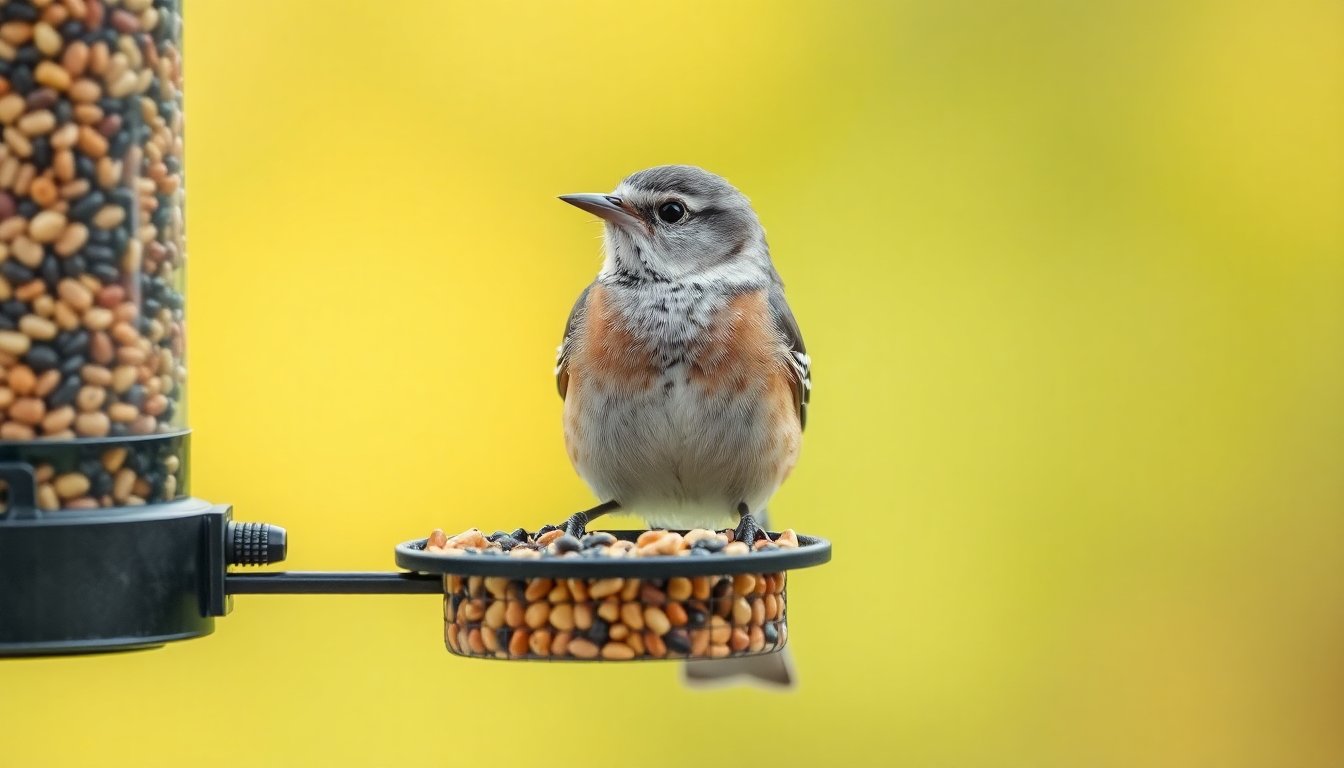
Wild Bird Seed
Quick Answer
Wild bird seed is a mix of grains and seeds used to attract a variety of backyard birds. The most universally appealing seed is the sunflower, available as black oil or striped, either in-shell or hulled. Common blends may also include white millet, red milo, cracked corn, and safflower. Selecting the right seed depends on the bird species you want to attract and the feeder type you use. For guidance on the most effective choices, see our guide to what bird seed attracts the most birds.
Preparation and Constraints
Before buying seed, consider:
- Target birds: Different birds prefer different seeds. For example, cardinals, chickadees, and titmice favor sunflower, while sparrows and doves also eat millet and cracked corn.
- Feeder type: Tube feeders, hopper feeders, and platform feeders each work best with certain seed forms (e.g., hulled sunflower for less mess).
- Storage: Seed should be kept in a cool, dry place to prevent mold and spoilage.
- Quality concerns: Research on bird seed purchased in Texas found aflatoxin concentrations from non-detectable to 2,780 micrograms/kg; 17% of samples exceeded 100 micrograms/kg, with 83% of those containing corn as an ingredient. Choose fresh seed from reputable suppliers.
Step-by-Step Process
- Identify your target birds. Observe which species visit your yard or use a regional bird guide. Common backyard visitors include cardinals, chickadees, titmice, sparrows, and doves.
- Select a seed type. Based on desk research:
- Sunflower seed (black oil or striped) is the most universally accepted.
- Specialized blends may include white millet, cracked corn, and safflower for variety.
- Hulled sunflower reduces mess under the feeder.
- Choose a feeder. Match the feeder to the seed: tube feeders for sunflower, hopper feeders for mixes, and platform feeders for cracked corn. If targeting cardinals, consider a cardinal bird feeder designed for their perching style.
- Fill and place the feeder. Position it in a quiet area near cover (trees or shrubs) but away from predators. Clean feeders regularly.
- Monitor and refresh. Discard any seed that becomes wet, moldy, or smells off. Clean feeders regularly, especially in winter when natural food is scarce, which can attract more birds to feeders.
Checks and Next Steps
- Check for spoilage: Smell and visually inspect seed; discard if musty or clumped.
- Check for pests: Use squirrel baffles or cages if needed.
- Next step: If attracting specific species, adjust your seed mix accordingly. For example, offer safflower to deter squirrels while still feeding cardinals.
Decision Tree
| Reader Condition | Question | Branch | Recommended Next Step |
|---|---|---|---|
| You want to attract the widest variety of birds | Which seed type is most universally appealing? | Universal appeal | Choose black oil sunflower seed. |
| You are concerned about seed quality or mold | What risk should I watch for? | Quality concern | Buy from reputable sources and store seed in a dry, cool place. Check for aflatoxin reports. |
| You want to attract specific birds like cardinals or chickadees | Which seed is best for cardinals? | Specific species | Use sunflower, safflower, or a mix containing these. |
Practical Takeaways
- Sunflower is the most universally appealing seed for a wild bird feeding station.
- Blends can offer variety but may include fillers like milo that some birds ignore.
- Check for spoilage regularly to keep birds safe.
- Store seed properly to avoid attracting pests and to preserve freshness.
Based on desk research of published sources; no firsthand testing was conducted by Backyard Birding Lab.